Phu Quoc Travel Guide 2026 — The Complete Island Handbook
This is the complete guide to Phu Quoc for 2026 — written by someone who lives here. Instead of duplicating what you can find on Booking.com's blog, we've organized ten in-depth guides into one handbook: exactly when to go, where to stay (by budget and neighborhood), real 2026 prices, the beaches worth your time, where to eat (and where to avoid), how to get around, and a tested 7-day itinerary. Every section links to a full-depth article — bookmark this page and come back as you plan.
⚡ QUICK ANSWER
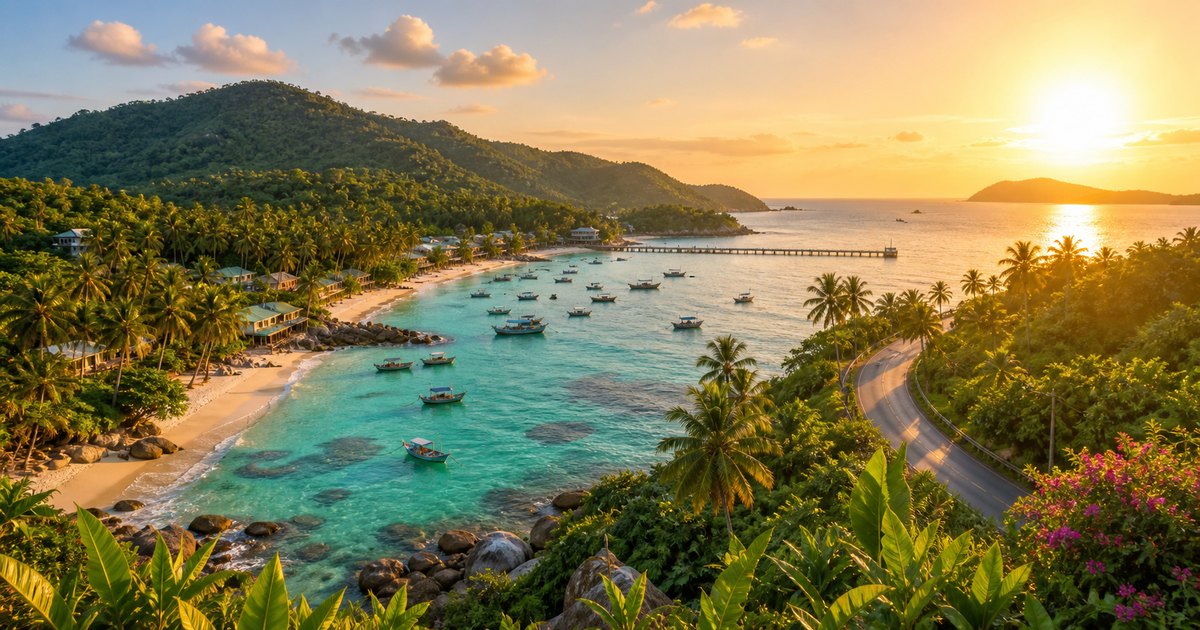
Phu Quoc is Vietnam's largest island, off the south-west coast — known for beaches, diving and a special visa-free exemption for tourists (commonly up to 30 days). The best time to visit is November–April (dry season). Budget travelers get by on $30–50/day, mid-range around $80–120. Get there by direct flight to Phu Quoc (PQC) or ferry from Rach Gia/Ha Tien. Stay 4–7 days to cover the beaches, An Thoi islands, night market and national park.
Why Phu Quoc (and Why Now)
Phu Quoc is Vietnam's largest island — roughly the size of Singapore — sitting in the Gulf of Thailand off the country's southwest coast. It combines three things that rarely coexist in Southeast Asia: truly budget-friendly prices, a well-maintained natural environment (half the island is still protected forest), and easy accessibility (direct flights from Ho Chi Minh City, Hanoi, and a growing list of international hubs). You can land from Seoul or Moscow before noon and be on a 30°C beach by sunset.
Compared to 2019, the island has matured: the road network finally covers the north, the cable car to Hon Thom is working smoothly, and small Vietnamese-run homestays like ours have grown to compete seriously with the resort monoculture. The result for travelers is more authentic choice — and for the right visitor, better value than anywhere else in the region.
When to Visit — Season by Season
The dry season runs from November to April. This is when Phu Quoc is at its calendar-perfect best: skies clear, water flat and turquoise, humidity manageable. November and December are our own personal favorites — prices haven't yet peaked, temperatures sit in the high 20s, and island hopping is reliably smooth. The highest demand window is late December through early February (Tet, lunar new year); rates double or triple, and booking 2+ months ahead is essential.
The rainy season (May to October) is not what outsiders imagine. It rains, yes — but mostly in intense afternoon bursts lasting 30–60 minutes, followed by sunshine. Mornings are often perfect. Budget travelers and digital nomads actually prefer this window: prices drop by 30–50%, crowds thin out, and the jungle comes alive. The sea can be choppy for island boat tours between July and September — plan accordingly.
→ Read the full best-time-to-visit guide
Where to Stay — Areas & Budget
Four distinct stay zones serve different travelers:
- Duong Dong (central town). Where locals live and work. Best for first-time visitors, budget travelers, and anyone who wants to walk to restaurants, markets, and the night market. This is where Sabrina Homestay is.
- Long Beach / Bai Truong (west coast). The long strip of mid-range hotels and beach bars. Good for beach-focused trips and families.
- Ong Lang (northwest). Quieter, more upscale. Good for couples and honeymooners who want resort seclusion.
- An Thoi (south). The boat-tour gateway, close to Bai Sao. Industrial vibe in the town itself but close to the best beaches.
For homestays specifically, Duong Dong gives the best mix of amenities, walkability, and budget pricing. For resort stays, Long Beach; for seclusion, Ong Lang.
→ Full breakdown of all neighborhoods
What It Costs in 2026
Phu Quoc in 2026 is more expensive than pre-pandemic, but still a stellar value by regional standards. Rough daily totals:
- Ultra-budget: $25–40/day (hostel dorm or homestay, street food, motorbike, one island activity/week)
- Budget: $50–80/day (private room $15–25, mix of local and mid-range food, motorbike, occasional taxi, one activity per day)
- Mid-range: $100–180/day (3–4 star hotel, mostly restaurant meals, taxi/car hire, multiple paid activities)
- Luxury: $300+/day (resort, fine dining, private driver, spa, premium activities)
Accommodation is usually 40–50% of total spend. Food is shockingly cheap if you eat where locals eat (a full pho breakfast can cost under $2). Motorbike rental runs $6–10/day including fuel.
→ Detailed accommodation cost breakdown
The Beaches Worth Your Time
Phu Quoc has 150+ kilometers of coastline, but only about a dozen beaches that are worth a dedicated trip. The standouts:
- Bai Sao (south): The postcard beach. Powder-white sand, turquoise water, a handful of beach bars. Go early (before 10 AM) to beat the tour buses.
- Ong Lang (northwest): More secluded, quieter, better for long walks.
- Bai Khem: Near the south cable car. Stunning but gets crowded.
- Vung Bau (north): Off-the-radar, fewer facilities, peaceful.
- Long Beach (central): Great sunsets, plenty of beach bars, most accessible.
Food & the Night Market
Eating on Phu Quoc is one of the island's highlights. Seafood is the star — plucked from the sea that morning, grilled over charcoal at the Dinh Cau Night Market for a fraction of restaurant prices. Must-try dishes: grilled scallops with spring onion oil, sea urchin (seasonal), banh canh cha ca (thick noodle fish cake soup), goi ca trich (herring salad, unique to the island), and fresh coconut everywhere.
Budget $6–10/day for food if you eat at local spots; $15–25/day for mid-range restaurants with seafood; $40+ for upscale dinners at resort-area restaurants. The Dinh Cau Night Market opens 5 PM nightly and is the single best food experience on the island.
→ Complete food & night market guide
Getting To & Around Phu Quoc
Getting to the island: Phu Quoc International Airport (PQC) is served by direct flights from Ho Chi Minh (55 min), Hanoi (2h), Seoul (5h 20m), Moscow (via Hanoi), Bangkok, and seasonal European charters. Ferries also run from the mainland (Ha Tien and Rach Gia) if you're island-hopping Vietnam.
Getting around: Rent a motorbike (~$6–10/day) — it's the freedom ticket. If motorbikes aren't your thing, Grab (Vietnam's Uber) works in Duong Dong and Long Beach, taxis are plentiful, and for groups, a car with driver runs $40–80/day.
Activities Beyond the Beach
Phu Quoc is not just beaches. The worthwhile non-beach activities, in order of recommendation:
- Island hopping (4-island boat tour): $20–30/person, snorkeling included
- Hon Thom cable car + Sunworld park: $25–40, one of the world's longest over-sea cable cars
- Phu Quoc National Park trek: free, half-day
- Pearl farm tour: free-to-visit, interesting for 1h
- Fish sauce factory: free, unforgettable smell, actually cool to learn about
- Cooking class: $25–45, highly rated among guests
→ All things to do on Phu Quoc
For Digital Nomads & Long Stays
Phu Quoc has quietly become a top Southeast Asian digital nomad destination. Why: stable 50+ Mbps WiFi (we've tested every cafe and homestay in the area), low cost of living ($600–1200/month all-in), and a genuine beach-town lifestyle. Compared to Canggu and Chiang Mai, Phu Quoc offers a smaller scene but better value and fewer crowds.
Monthly apartment rates start around $350 for a proper long-term room with kitchen, workspace, and 100 Mbps WiFi. Visa: 30-day e-visa is easy; many nomads extend via visa runs to Cambodia or by switching to a 3-month tourist visa.
→ Complete digital nomad guide
A Proven 7-Day Itinerary
Seven days is the sweet spot for Phu Quoc — long enough to hit all the highlights without rushing, short enough that most people can fit it into an annual vacation. In outline:
- Day 1: Arrive, check in, walk around Duong Dong, sunset at Dinh Cau Rock, dinner at the night market.
- Day 2: Bai Sao beach, full relaxation day, seafood lunch.
- Day 3: Island hopping boat tour, snorkeling, lunch on board.
- Day 4: North exploration by motorbike — Ong Lang, pepper farms, Vinpearl area.
- Day 5: Phu Quoc National Park trek, waterfalls.
- Day 6: Culture day — fish sauce factory, pearl farm, cooking class, night market.
- Day 7: Morning beach, pack, airport transfer.
→ Full day-by-day itinerary with times, prices & tips
Phu Quoc vs Bali — Quick Comparison
Short version: Bali wins on nightlife, yoga/wellness scene, and dramatic landscapes. Phu Quoc wins on price, beach quality, tranquility, and ease of long stays. If you've done Bali and want the same tropical island experience at half the cost with less traffic, Phu Quoc delivers.
→ Full Phu Quoc vs Bali comparison
Questions We Get Weekly
Do I need a visa? Phu Quoc has historically offered a 30-day visa exemption for tourists arriving by direct international flight and staying only on the island. For mainland Vietnam continuation, most nationalities need an e-visa ($25, 90-day), which takes 3 business days. Double-check your nationality before booking.
Is it safe? Very. Phu Quoc has one of the lowest crime rates of any major tourist destination in Southeast Asia. The main risks are motorbike accidents (wear helmets, don't drink and ride) and basic pickpocketing in crowded markets.
Can I drink tap water? No. Buy bottled water (5,000–10,000 VND / 1.5L) or ask your accommodation for filtered water — most homestays and hotels provide complimentary bottled water.
Do I need cash? Mix. ATMs are common in Duong Dong. Cards work at resorts and larger restaurants but not at markets, most street food, or motorbike rental shops. Withdraw 5–10 million VND ($200–$400) at the airport to cover the first few days.
Is English widely spoken? Basic English is common in tourist areas. Outside tourist zones, Google Translate is your friend. At Sabrina Homestay we speak English, Russian, and Vietnamese.
Is there a beach near Sabrina Homestay? Long Beach (Bai Truong) is 5 minutes by motorbike, 15 minutes on foot.
Ready to Book?
Sabrina Homestay offers private rooms from $15/night in Duong Dong — 10 minutes from the night market, 5 minutes from Long Beach. Book direct and save 10–20% vs OTAs.
Book Your Stay →Reply within 1 hour on WhatsApp with real-time availability